Flat Roof vs. Shingle Roof: Pros, Cons & Best Uses
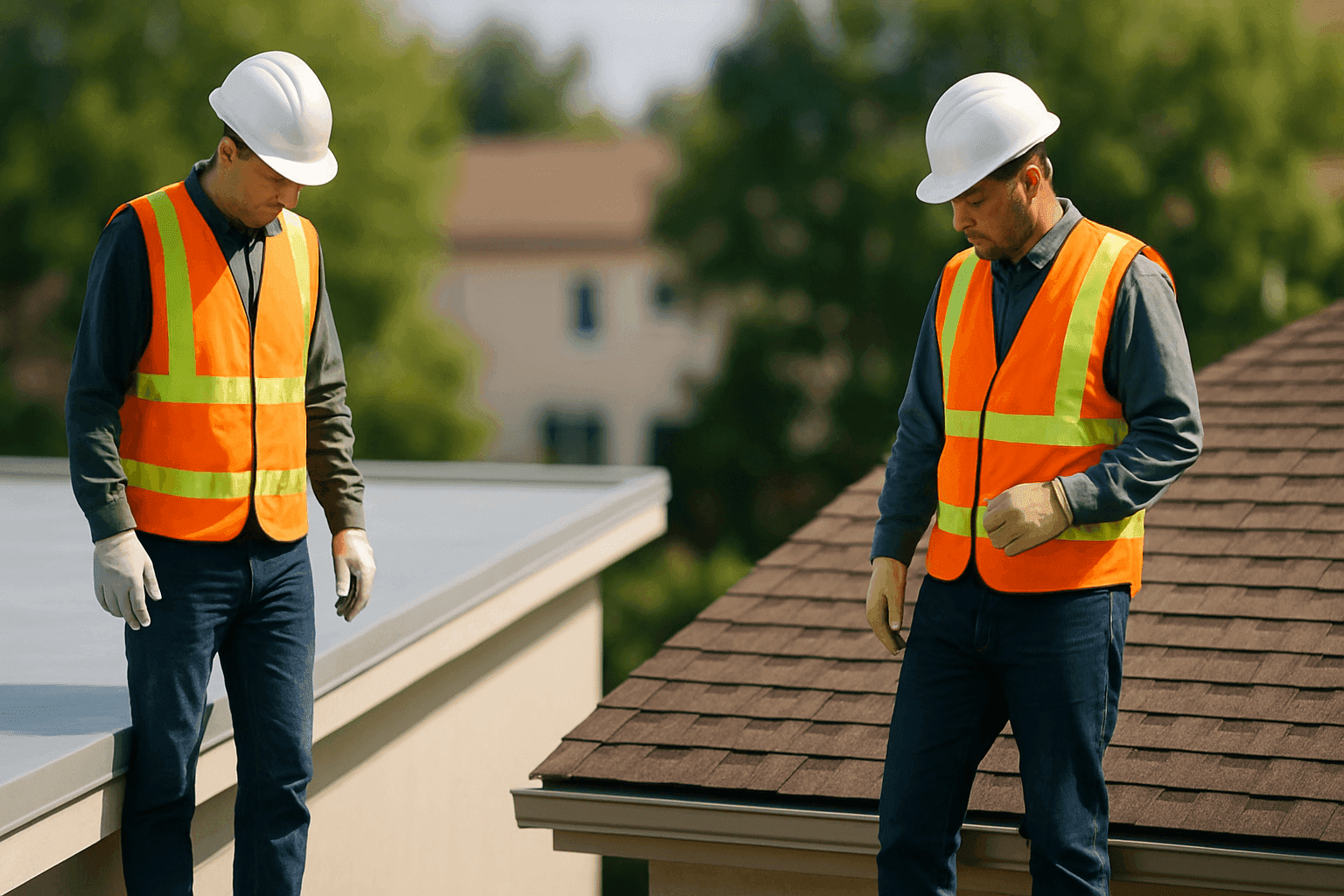
When your roof is calling out for attention—leaking, sagging, or simply showing its age—you need answers fast. Whether you’re a homeowner looking for a cozy upgrade or a business owner dealing with the aftermath of a storm, choosing the right type of roof isn’t just about looks. It’s about safety, cost, and long-term peace of mind.
At Chucks Roofing, we handle emergency roofing projects every day. We’ve seen what works, what lasts, and what keeps folks dry year after year. Let’s break down the main differences between flat roofs and shingle roofs, so you can make the best choice for your property.
What Is a Flat Roof? (Materials, Applications) 🏢
Flat roofs don’t mean perfectly flat, but they’re close. With a slight pitch for drainage, these roofs are common on commercial buildings, warehouses, and modern homes.
Typical flat roof materials:
- Modified Bitumen: Flexible sheets rolled out and sealed for water resistance.
- Built-Up Roofing (BUR): Layers of tar and gravel, built up like a club sandwich.
- Single-Ply Membranes: Think EPDM (rubber), TPO (thermoplastic), or PVC—tough, flexible, and relatively lightweight.
- Spray Polyurethane Foam (SPF): Sprayed on, then hardens into a seamless, insulating layer.
Where you’ll find flat roofs:
- Commercial buildings and offices
- Apartment complexes
- Modern-style homes
- Garages and home additions
- Industrial facilities
Flat roofs are prized for their usable space—think rooftop gardens, HVAC platforms, or solar panels. Their design makes them a go-to for larger, boxy structures where traditional sloped roofs just won’t fit the bill.
What Is a Shingle Roof? (Materials, Applications) 🏠
Shingle roofs are what most folks picture when they think “home.” Overlapping pieces create a water-shedding surface that’s stood the test of time.
Common shingle roof materials:
- Asphalt Shingles: Affordable, easy to install, and the most popular choice in North America.
- Architectural Shingles: Thicker, textured, and longer-lasting than standard asphalt.
- Wood Shingles & Shakes: Beautiful, but require extra care.
- Slate Shingles: Heavy, luxurious, and built to last for generations.
- Metal Shingles: Lightweight and extremely durable.
Shingle roofs work best for:
- Single-family homes
- Small businesses
- Garages
- Cottages and cabins
The classic “pitched roof” look comes from shingles, and it helps with rain and snow runoff. They’re often chosen for their curb appeal and the broad palette of colors and textures available.
Pros and Cons (Durability, Cost, Maintenance, Aesthetics)
Let’s stack up the two contenders side by side. Like choosing between sneakers and boots—both protect your feet, but each has its place.
Flat Roof Pros
- Usable Space: Install solar panels, set up a patio, or create a green roof.
- Easy Access: Maintenance and inspections are safer and simpler.
- Modern Look: Clean lines fit contemporary architecture.
- Cost-Effective (Large Areas): Materials can be less expensive for big, open spans.
Flat Roof Cons
- Drainage Risks: Water pools if drainage isn’t perfect—hello, leaks.
- Shorter Lifespan: Typically 10–25 years, depending on material and care.
- Maintenance Needed: Debris and ponding require regular attention.
- Limited Pitch: Not always ideal for heavy snow regions.
Shingle Roof Pros
- Great Water Shedding: Sloped design lets rain and snow slide right off.
- Long Lifespan: Asphalt shingles last 20–30 years; metal or slate can last 50+.
- Low Maintenance: Occasional inspection and gutter cleaning usually do the trick.
- Wide Variety: Colors, shapes, and styles to match any neighborhood.
Shingle Roof Cons
- Limited Usable Space: No rooftop deck or garden.
- More Complex Repairs: Patch jobs can be tricky, especially for tile or slate.
- Wind Vulnerability: Shingles can lift in major storms.
- Steeper Cost for Large Buildings: Not ideal for big, flat commercial roofs.
Common Use Cases (Home, Business, Garages, Additions) 🏬
Flat Roofs:
- Commercial/Industrial Buildings: Flat roofs maximize space and utility.
- Modern Homes: Clean silhouettes, especially in urban neighborhoods.
- Garages & Extensions: Where a pitched roof isn’t practical.
Shingle Roofs:
- Residential Homes: The default choice for most single-family dwellings.
- Small Businesses: Offices, shops, and clinics with traditional curb appeal.
- Garages: Especially when matched to the main house.
Which Roof Is Right for You? (Including Climate & Decision Flowchart) 🌦️
Picking a roof is like picking a coat—you need the right fit for your local weather, budget, and style. Here’s what to consider:
Climate Considerations
- Heavy Snow or Rain? Shingle roofs (pitched) handle runoff best.
- Hot, Dry Regions? Flat roofs with the right coatings reflect sunlight and save energy.
- High Winds? Architectural shingles and metal options offer better resistance.
- Urban Heat Islands? Flat roofs allow for green or “cool” roofing solutions.
Building Codes & Warranties
Both flat and shingle roofs must meet local building codes—these cover fire ratings, wind resistance, and installation standards. Always check with your local building department or the International Building Code (IBC) for requirements. Most manufacturers offer warranties, but only if installation and materials meet code—cut corners, and you’re on your own.
Decision Flowchart
Start here:
-
Is your building residential or commercial?
- Residential: Go to 2.
- Commercial: Go to 3.
-
Do you want attic space or classic curb appeal?
- Yes: Shingle roof.
- No (modern look, flat addition, or rooftop deck desired): Flat roof.
-
Is your building’s roof area over 2,000 sq. ft.?
- Yes: Flat roof is likely most cost-effective.
- No: Shingles or metal may still be an option.
-
Do you live in a region with heavy snow or frequent storms?
- Yes: Shingle roof (with proper reinforcement) or metal.
- No: Flat roof can be suitable with quality drainage.
-
Are you hoping for extra outdoor space or solar panels?
- Yes: Flat roof.
- No: Shingle roof.
If you’re still unsure, our team at Chucks Roofing can inspect your property and offer tailored advice—always in line with local codes and manufacturer requirements.
Practical Tips for Choosing & Maintaining Your Roof
- Inspect regularly: Twice a year and after major storms.
- Keep gutters and downspouts clear: Water backup leads to leaks and damage.
- Check for pooling water (flat roofs): Address drainage issues right away.
- Trim back overhanging trees: Prevents debris and shingle damage.
- Ask about warranties: Most roofing materials come with manufacturer warranties. These may be voided if installed improperly.
For more on safety, refer to OSHA’s fall protection standards and your local building department for roofing requirements.
FAQ: Flat vs. Shingle Roofs
Q: How long does each type of roof last?
A: Shingle roofs generally last 20–30 years for asphalt, up to 50+ for metal or slate. Flat roofs last about 10–25 years, depending on material and maintenance.
Q: Which roof is cheaper to install?
A: For small homes, shingle roofs are usually less expensive. For large, open buildings, flat roofs may win on cost.
Q: Can I put a flat roof on my house?
A: Yes, especially for modern designs or additions. Just be sure you’re comfortable with more frequent maintenance.
Q: What is the best roof for emergency roofing repairs?
A: Both types can be repaired quickly in an emergency. Fast access is easier on flat roofs, but shingle repairs are often simpler for standard homes.
Local & Seasonal Considerations
- Snowy winters? Shingle or metal pitched roofs help prevent ice dams and leaks.
- Hot summers? Reflective flat roof coatings can cool your building and lower energy bills.
- Storm season? Impact-rated shingles and regular inspections keep damage at bay.
- Tree cover? Watch for leaves clogging gutters and downspouts—schedule regular cleaning.
Every region brings its own challenges. That’s why Chucks Roofing stays up-to-date on code changes, weather trends, and the latest materials.
Ready to talk about your next roof—flat or shingle, home or business, emergency roofing or planned project? Call Chucks Roofing now — or reach us anytime at 888-885-5921 .